UK-hardy tropical garden design tips: bold colour, cornerstone plants and hard landscaping ideas
Creating a UK-hardy tropical garden is about more than rain and shade—it’s about shaping a lush, warm retreat that feels tropical and exotic even in a cool, misty British climate. With smart design, you can achieve a tropical garden design you will love, using hardy plant selections, thoughtful hard landscaping, and a planting plan that delivers year-round interest. This guide covers the essentials for Essex and Suffolk counties: hard landscaping structure, planting strategies suitable for our soil, and the cornerstone plants to include for lush and colourful planting.
What is a UK hardy tropical or exotic garden?
A UK-hardy tropical or exotic garden blends bold foliage, architectural shapes, deeply lush seclusion, and exotic colours with plants that tolerate cooler winters. The aim is to recreate a tropical mood: lush greens, glossy leaves, and vibrant foliage or flowers - while choosing species that survive typical UK conditions. Think sheltered microclimates, warm micro-sites near walls or south-facing borders, well-drained soil, and clever use of windbreaks and water features. The result is a garden that feels like a tropical enclave, but is practical to grow in the UK.
Key ideas to keep in mind that deliver the overall look:
Use evergreen structure for year-round tropical impact and layer exotic-looking plants from ground cover to mid-height and up to towering accents.
Combine cornerstone plants with bold foliage and flowers with reflective surfaces and warm lighting to emphasise the garden.
Embrace drainage-friendly soils, raised beds where needed and create microclimates that protect tender varieties.
Consider hard landscaping that is able to handle sun-to-shade light levels, with interesting use of dramatic features, stylish built structures and artful colour themes.
Design tips: hard landscaping structure providing garden room’s outdoors
Hard landscaping forms the backbone of a UK hardy tropical garden. It defines paths, seating, walls, and structural repetition, giving you a canvas to showcase exotic planting. What to include in your hard landscaping plan:
Pathways and circulation: Winding or curving dark slate with stepping stones or porous stone paths create a tropical feel and invite exploration. Align paths to sunlight and access to seating areas.
Walls, fences, and screens: Use dark stained timber, dark brick, or brightly coloured walls to absorb heat and create warm microclimates. Hot-coloured walls can make foliage pop beautifully. Bamboo screens and laser cut corten screens with bamboo pattern, add an intimate feel. Use structures to support climbing plants to create lush vertical walls.
Raised beds and retaining walls: Elevate borders to improve drainage and make dramatic planting pockets. Raised beds also help in creating tall microclimates for tender specimens.
Water features: A small pond, stream, or fountain adds movement and the tropical soundscape that many tropical plants love. Water helps create humidity, supporting lush growth in summer.
Seating and shade: Create intimate nooks with teak or cedar seating, a thatched garden bar or pergola for a "holiday" ambiance, and lattice screens for climbing plants. Consider a shaded corner with a breathable canopy or bamboo slatted roof for plants that like bright, but indirect light.
Mulch and moisture: A thick mulch (organic manure mulch and feature decorative stones or rocks) helps maintain moisture, suppress weeds, and give the beds a jungle finish. Ensure good drainage with sand or coarse organic matter where heavy soils exist. Consider raised beds in poorly drained areas and irrigation for planting that likes it moist in summer.
Lighting: Subtle warm low level up-lighting highlights structure and under leaves of foliage after dusk, extending the tropical mood into evenings. Use festoon lighting to create a magical, warm atmosphere in the evenings.
Design tip: Harmonise hard landscaping with your planting palette. The edges where stone meets planting should feel intentional, not incidental. A consistent material palette (for example, sandstone pavers with timber borders) reinforces the tropical mood and helps the garden feel cohesive year-round.
Vibing it: Piecing together colour palettes and themes for tropical-inspired UK gardens
MAXIMALIST VIBE: bold, bright colour-drenching combinations for an entertaining heaven
The clashing, bright planting theme - Combine bright green foliage with clashing hot pinks, bright oranges, and sunset yellows from flowering tropicals for a vibrant and uplifting mood.
The purple-pink-red-orange planting theme - Basically the above, but eliminating yellow for a slightly more harmonious colour palette.
Hard landscaping:
Pair either planting options with hard landscaping in hot coloured walls, crisp light coloured porcelain or sandstone patio’s with herringbone pavers along pathways, and pale composite decking (adding detail and texture wherever possible).
Style with chunky furniture in bold colour-blocks.
Sound is adjustable with speakers for entertaining and film nights.
Add funky lighting in brushed chrome or contemporary composites (eg, festoon lights, sphere/ orb lights and funky large format angled lighting over seating).
Mix and match materials, even contemporary alongside vintage for a curated, but heavily styled look which supports entertaining friends and family.
Consider an outdoor entertainment suite - play, cinema, cooking or eating - that invigorates and uplifts.
MINIMALIST VIBE: monochrome paired back combinations for a hidden, secret, jungle
The green, layered and understated dream planting theme - Pair deep and varied greens with a splash of lime or chartreuse foliage (excluding bight florals) for a modern paired back tropical look that’s lush but calming.
The dark, tonal hideaway planting theme - Mix large-leaf plants with architectural grasses and metallic-silvery foliage to mimic exotic undergrowth, blues and purples paired with grey-green and purple-black foliage for balance.
Hard landscaping:
Pair either planting options with hard landscaping in minimalist black / dark green or dark grey tonal options utilising these dark colours to highlight the planting.
Subtle directional lighting in black or brushed gold metals (eg, pathway recessed lights, tree lights, storm lanterns on tables and around furniture, luminous underwater lighting).
Sound is calm and minimal with a simple bamboo wind chyme.
Simple dark painted slatted fencing, dark large format porcelain/ slate/ sandstone slabs to absorb heat, with accent detail in slate chips or simple wood chip.
Pick 3 main materials and stick to them, don’t allow clutter or overly complicated viewpoints.
Negative space (eg wide pathways, sun drenched patio’s framed by dark and lush planted borders) declutters the garden and allows planting to provide drama.
Garden ‘rooms’ are ideal here with private spaces for reading, sleeping, yoga or eating in a private retreat that promotes rest and recuperation.
Planting strategy: how to build the tropical look
Planting is where your UK hardy tropical garden truly comes alive. A successful exotic design uses layering, evergreen structure, and bold foliage to simulate tropical scenes while staying robust in a British climate.
Key planting principles:
Layer by height: Ground cover, mid-height perennials and shrubs, and tall structural plants and trees create depth and an exotic silhouette.
Evergreen backbone: Use evergreen species for year-round form and color. They provide the consistent “furniture” of the garden while seasonal plants rotate through.
Foliage over flower power: Large, glossy leaves and dramatic shapes give a tropical feel even when exotic blooms are modest.
Microclimate awareness: Plant tender options in sheltered microclimates and sun-trapped spaces that absorb heat during the day and release it at night (south or west-facing walls, near hedges).
Soil and moisture: Improve drainage with plenty of organic matter; water-demanding tropicals appreciate regular moisture in the growing season, but avoid waterlogged roots.
Seasonal interest: Introduce a few seasonal accents—flowering shrubs, grasses, or heucheras—to maintain interest through autumn and winter.
Containers: Don’t overlook pots. Container-grown tropicals can be moved to reveal sun or shade and protected during frosts.
Practical tips:
Prepare the soil with compost and well-rotted manure before planting. This enriches the bed and improves structure for roots and water retention.
Use mulch to retain moisture and reduce weed growth. A 5-7 cm layer is usually sufficient.
Group plants in clusters to look natural and cohesive.
Reserve some space for evergreen structural plants that will always anchor the bed.
Cornerstone plants: top plants to include for exotic planting
Here are the top cornerstone plants to include for planting in a UK-hardy tropical garden. These specimens give you the tropical silhouette, evergreen backbone, and architectural drama that define the style. They blend well with hard landscaping and provide reliable performance in UK conditions.
Low-mid level herbaceous perennials, shrubs, ferns and grasses
Acanthus Mollis (Bear's Breeches) - Architectural, tall flower spikes and large spiky leaves add dramatic texture. Prefers moist, well-drained soil, can spread.
Phormium Tenax ‘Sundowner’, ‘Surfer Bronze’, ‘Maori Maiden’ (New Zealand Flax) - Bold, sword-shaped foliage. Very hardy, prefers well-drained sunny to partly shaded sites.
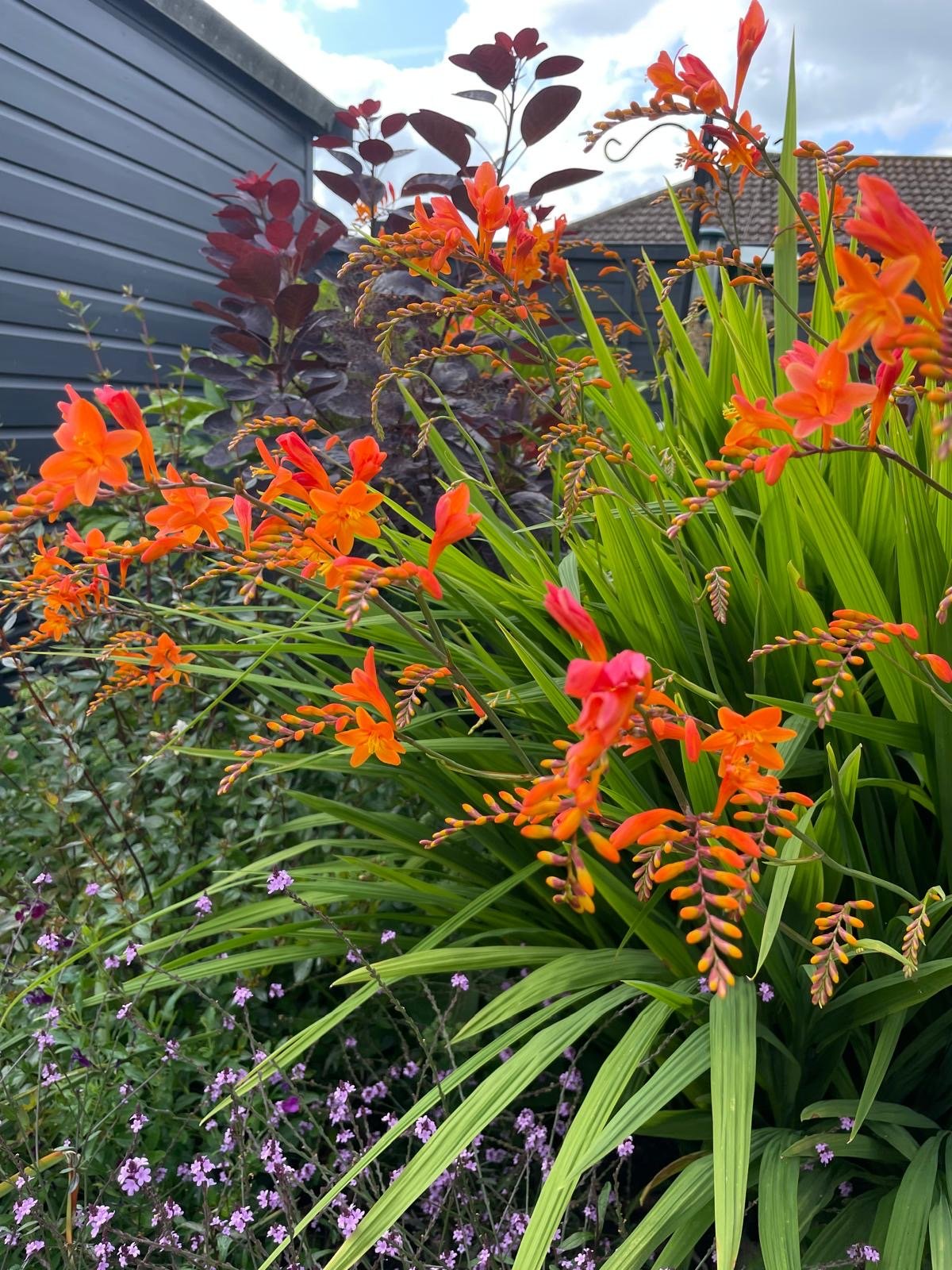
Crocosmia (Montbretia) - Hardy, low-maintenance, late-summer flowering with sword-like foliage and vibrant red, orange, or yellow flowers, in full sun and well-drained soil.
Iris Japnoica (Fringed Iris, Iris Chinensis) - Evergreen fringed iris, forming clumps with pretty flowers and happy in full sun to part-shade.
Geranium ‘Ann Folkard’, ‘Red Eye’, ‘Mavis Simpson’, ‘Rozanne’, ‘Simpsons Blue’ (Hardy Geranium or Cranesbill) - bright foliage with ample flowers and semi-shade.
Agapanthus ‘Fireworks’, ‘Midnight’ - Offers dramatic, ball-shaped blue or white flowers that thrive in sunny, dry spots in good soil.
Hosta 'Big Daddy', ‘Mouse Ears’ - Sculptural, corrugated grey-blue leaves are topped with spikes of trumpet-shaped flowers. Prefers moist, rich soil.
Heuchera ‘Eternal Flame’, ‘Plum Pudding’, ‘Green Spice’, ‘Lime Marmalade’ (Choral Bells) - Evergreen with delicate summer flower spikes, partial shade and well-drained soil.
Brunnera Macrophylla (Siberian Bugloss) - Clump forming, with broad sprays of small, clear blue flowers, followed by large heart-shaped, long stalked leaves.
Kniphofia ‘Tawny King’, Papaya’ (Red Hot Poker) - Striking and low-maintenance with torch-like blooms. Thriving in full sun and well-drained soil/ drought-tolerant.
Loropetalum Chinensis ‘Fire Dance’ (Chinese Witch Hazel) - Bright pink flowers in spring/ late summer contrast with dark purple-bronze hued foliage for year round colour.
Zantedeschia Aethiopica (Calla Lilies) - Striking white flower-spathes with glossy foliage. Requires full sun, moist and well fed soil.
Asplenium Scolopendrium (Hart's Tongue Fern) - An evergreen fern that is both eye-catching and new tongue-like fronds unfurl, creating upright clumps.
Cyrtomium Fortunei (Japanese Holly Fern) - Distinctive semi-evergreen fern features bold, leathery fronds with a rich green gloss, even in low-light areas.
Matteuccia Struthiopteris (Shuttlecock Fern) - A deciduous fern forming colonies of upright bright green fronds.
Epimedium - Valued as ground cover in dappled or deep shade. The heart-shaped leaves provide texture and varying colours through the seasons, with dainty, star-like flowers.
Melica Altissima 'Alba' (Siberian Melic Grass) - A clump-forming grass with rough-textured, pale green leaves, and delicate white spikelets from late spring to midsummer.
Hakonechloa Macra ‘Aureola’ (Japanese Forest Grass) - Arching and flowing blades; excellent ground cover under taller plants. Part shade to shade and moist.
Ophiopogon Planiscapus 'Kokuryū' (Mondo Grass) - A low evergreen, forming dense tufts of arching, leathery black leaves and small purplish flowers with glossy black berries.
Carex Oshimensis 'Everillo' (Sedge grass) - A low-maintenance evergreen grass in a bright lime-green to golden-yellow mound. Happy in wet to dry conditions, full sun to shady.
Pittosporum Tobira ‘Nanum’ (Japanese Mock Orange) - Evergreen shrub with honey fragranced flowers and dark glossy leaves.
Hebe ‘Pinky Winky’ (Shrubby Veronica) - Evergreen, purple flowers, glossy grey-green foliage and small bushy habit.
Euphorbia ‘Miners Merlot’ (Spurge) - Upright stems with dark foliage that turns into a deep burgundy shade in spring with bright acid-yellow flowers follow.
Euphorbia ‘Mrs Robb's Bonnet’ (Spurge, Euphorbia Robbiae) - A compact, tough, shade-tolerant perennial with glossy evergreen foliage and vibrant lime-green flowers.
Mid-high level shrubs requiring space to grow into
Trachycarpus Fortunei (Windmill Palm) - Classic hardy palm with soft, evergreen fronds. Needs some sun, protect from harsh winter winds, and good drainage.
Chamaerops Humilis (Dwarf Fan Palm) - Compact Palm with sculptural fronds for smaller spaces. Sun to part shade; tolerates cooler spots; well-drained soil.
Trachycarpus Fortunei (Hardy Fan Palm, Chusan Palm) - Especially pretty with lower level spiny leaves, the larger of the palm options which requires space.
Griselinia 'Apple Green' (New Zealand Privet) - Dense, evergreen shrub with leathery, light-green, lustrous glossy appearance. In Spring yellow-green flowers and Autumn fruits.
Fatsia Japonica (Japanese aralia) - Iconic tropical leaves and very adaptable; tolerates moist soils and partial shade.
Cotinus ‘Royal Purple’ (Smoke Bush) - Magnificent, dark red-purple leaves, turning scarlet in autumn and fluffy, smoke-like plumes of purplish-pink flowers in July and August.
Musa Basjoo (Hardy Banana) - Large tropical leaves, instant bold structure. Best in sun with protection from strong winds or cold winters.
Fargesia Robusta 'Campbell', 'Pingwu', ‘Rufa’ (Bamboo) - Best non-invasive, clump-forming bamboo, thrives in moist, well-drained soil in sun or shade.
Tetrapanax Papyrifer 'Rex' - Features massive, deeply lobed leaves, requires sunny but sheltered spot.
Hibiscus ‘Oiseau Bleu’, ‘Blue Chiffon’, ‘Purple Chiffon’ (Tree Hollyhock) - Flowering late summer to early autumn, thrives in full sun and prefers well-drained soil, hardy.
Physocarpus Opulifolius “Tiny Wine’, ‘Diabolo’ (Common Ninebark) - A vigorous deciduous shrub with upright, arching habit, small white flowers and burgundy leaves. Full sun.
Photinia Fraseri Pink Marble ('Cassini') - Variegated evergreen with glossy leaves margined with spring shocking-pink variegation and small, creamy-white flowers.
Cornus Alba ‘Ivory Halo’, ‘Kesselringii’, ‘Aurea’ (Siberian Dogwood) - Deciduous, green-purple/ white-green foliage. Spring/ summer flowers and blue-white berries. Moist soil.
Sambucus Nigra ‘Black Lace’ (Black Elder) - Dramatic foliage, deciduous, pale pick flowers and berries.
Hebe ‘Midsummer Beauty’, ‘Salicifolia’ (Shrubby Veronica) - Evergreen, purple flowers, glossy green foliage and bushy habit.
Euphorbia Mellifera (Honey Spurge) - Semi-evergreen, spring flowering, any soil in full sun.
Tees
Fig Tree - fruiting tree with beautiful leaves.
Arbutus Unedo Tree (Strawberry Tree) -evergreen with deep green hardy leaves and with very pretty flowers and edible fruit.
Albizia Julibrissin ‘Tropical Dream’, ‘Summer Sensation’ Tree (Silk Tree) - A medium-sized, deciduous tree with a broad, spreading crown. The large, mimosa-like leaves are composed of many small leaflets.
Catalpa Bignoides Aurea (Golden Indian Bean Tree) - A spreading tree with large, white, trumpet-shaped flowers at maturity. The large, golden, heart-shaped leaves turn bright yellow in autumn.
Cercis Canadensis ‘Hearts of Gold’ Tree (Eastern Redbud Tree) - Heart-shaped yellow-green leaves, small purple-red flowers in spring. Full sun.
Golden False Acacia Tree (Robinia or False Acacia Tree) - Large bushy tree, lime-yellow leaves and scented flowers.
Gleditsia Triacanthos Inermis (Thornless Honey Locust Tree) - Fast growing shade tree that’s tolerant of heat, shade and poor soil. Full sun and low maintenance.
Staghorn Sumac Tree (Rhus Tyhpinia Tree) - Suckering, shrubby tree with fanned deciduous leaves and rich autumn colours.
Sorbus Olympic Flame Tree - Vibrant Autumn foliage and deciduous, red berries, white flowers, hardy.
Climbers for extended reach
Hedera Helix (Ivy) on walls or screens for evergreen ground cover and vertical green screens. Full sun to semi-shade.
Trachelospermum Jasminoides (Star Jasmine) - scented evergreen winner for evenings, happy in semi-shade.
Clematis ‘Armandii’, 'Apple Blossom', ‘Montana’ - Vigorous, glossy-leaved vines that provide scented, early-spring flowers. They thrive in sunny, sheltered spots with well-drained soil, blooming on last year's wood.
Passiflora Caerulea (Passionflower) - fast-growing, exotic-looking climbing vines known for their intricate, structural blooms featuring shades of blue, white, and purple, blooming from summer through autumn. Edible opate fruits that hang as clementine size/ coloured balls.
Gloriosa 'Rothschildiana' (Flame lily) - delicate lily flower with brush strokes of bright red and yellow. Likes sunlight and ventilation but does need protection from the sun when it’s at its hottest.
Delicate specimens for indoor winter storage (best treated as container plants)
Colocasia 'Blue Hawaii’, ‘Black Magic’ (Black-veined taro) - Started indoors in spring, placed outdoors in summer in a warm, sheltered, sunny spot.
Canna Lillies ‘Tropicana’, ‘Monique’, ‘Durban’ (Indian Shot) - Vibrant tender perennials that produce bold leaves and showy flowers in shades of red, orange, yellows and pinks.
Pelargonium ‘Regal’, ‘Angel’, ‘Zonal’, ‘Orange Fizz’, ‘Royal Oak’ - Vibrant colour from the Geranium family, place in full sun, multi-season growth if stored indoors in winter.
Overall notes on cornerstone planting health and wellbeing:
Choose a mix of evergreen structural plants and bold-leaved perennials so you always have form, even when flowers aren’t at their peak.
In milder parts of the UK, you can experiment with more tender options in protected spots or containers. In harsher areas, favor the hardier cornerstone plants above and use microclimates to your advantage.
Watering: In summer, establish a consistent watering routine for established tropicals. Mulch helps retain moisture. In winter, reduce irrigation for evergreen varieties that carry through frosts.
Pruning and shaping: Trim back damaged fronds and dead stalks after winter to encourage fresh growth. Use clean cuts to prevent disease.
Fertilising: Feed with a balanced fertiliser in spring and continue through mid-summer for vigorous growth. Avoid overfeeding in pots, which can lead to weak growth.
Winter protection: Shield tender specimens (like Musa basjoo) in exposed climates. Consider mulch, burlap wraps, or container storage in very cold winters.
Pest and disease: Keep an eye out for snails, slugs, and scale. Remove affected leaves and consider organic controls to protect the plant’s health.
Building your UK hardy tropical garden
A UK hardy tropical garden isn’t about replicating the tropics exactly; it’s about capturing their essence through hardy, resilient choices. With thoughtful hard landscaping structure and a planting strategy built on evergreen form, bold foliage, and microclimate awareness, you can enjoy a tropical mood all year round. The cornerstone plants listed above provide the backbone you need to create dramatic focal points, while complementary plants and careful garden lighting finish the look.
If you’re planning a UK-hardy exotic garden renovation or a new build, start with your hard landscaping plan. Map your sun exposure, drainage, and sheltered spots. Then choose cornerstone plants for planting that suit your soil and climate. Layer your planting to create depth, texture, and colour that echo the tropical feel. Before you know it, your garden will feel like a tranquil beachside retreat—right in the heart of the UK. We can provide a step-by-step layout, a plant palette specific to your microclimate, and a planting schedule to maximise year-round interest. Contact us for a personalised consultation and start turning your space into a tropical dream.