Creating a Mediterranean-style garden
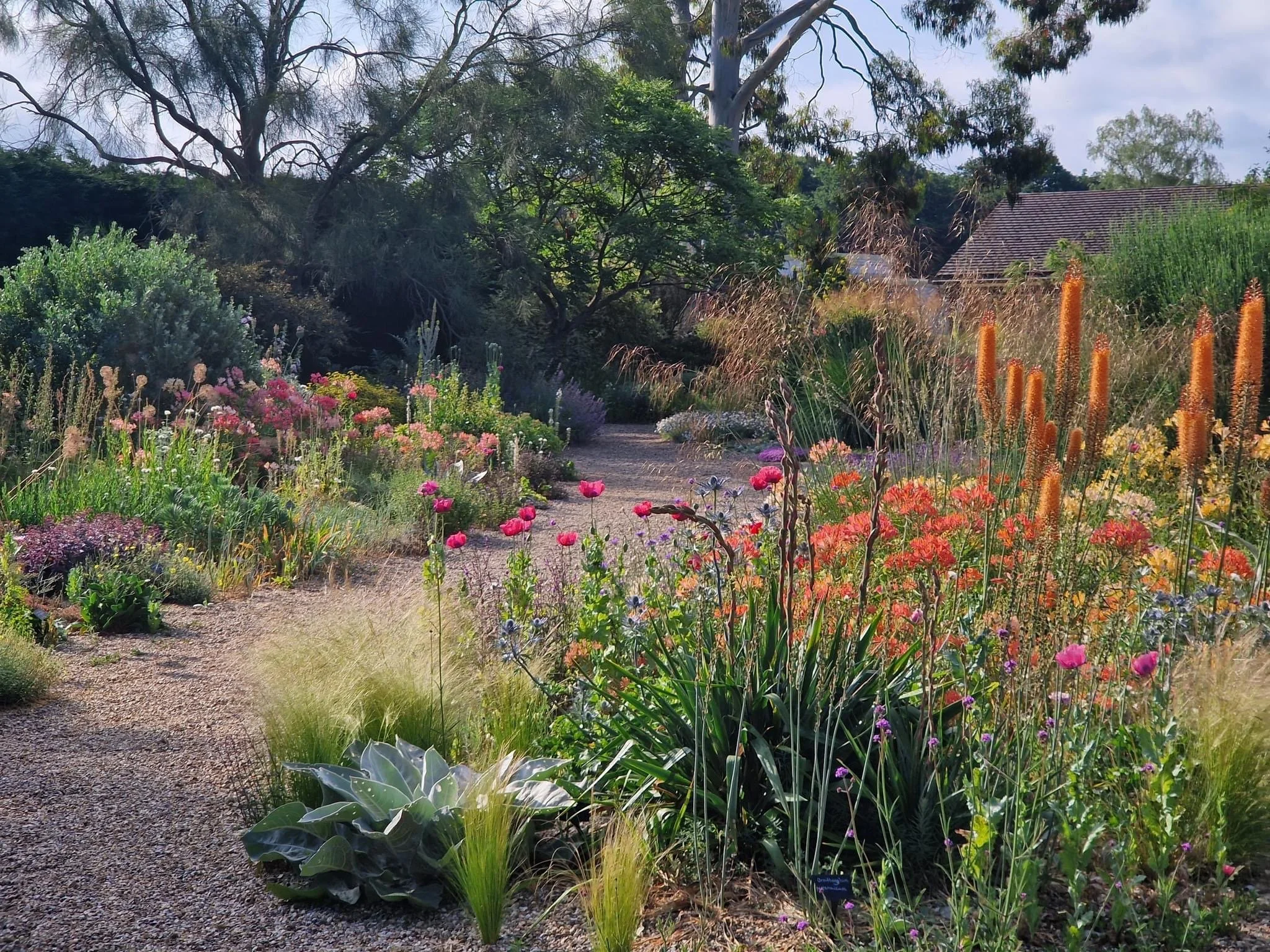
Beth Chatto’s dry garden is the epitome of the UK-hardy Mediterranean garden
This guide blends sun-loving Mediterranean aesthetics with the damp-winter realities of our UK climate, thoughtful hard landscaping for intimate areas to relax or entertain, chic features and focal points, clever planting schemes, and a handful of cornerstone creative style options. Increasingly popular, a Mediterranean garden means you can enjoy a drought-smart, low-fuss garden that still feels warm, sunlit and timeless.
Why a UK-hardy Mediterranean garden works in Essex and Suffolk
The Mediterranean look thrives on drought-tolerant planting, heavy sun exposure, and mixed aggregate textures. Our part of the UK is usually very dry, and considered a desert in rainfall terms.
In the UK, you’ll need to pick plants that tolerate rainy winters and occasional cold snaps, while still delivering heat-loving colour and structure in the growing season.
A well-designed Mediterranean-style border can offer year-round interest with evergreen backbone, silver-grey foliage, and seasonal bursts of bloom.
To get started, think in terms of three layers: hard landscaping that controls drainage and creates warm microclimates, a planting plan that mimics a dry-sunny Mediterranean bed, and a few cornerstone features that define the look.
Design Tips for Hard Landscaping
Hard landscaping provides the backbone of your UK-hardy Mediterranean garden. It shapes how water flows, how warm each corner feels, and how easy the space is to maintain.
Choose warm-toned materials that reflect Mediterranean vibes. Think limestone, sandstone, terracotta tiles, and warm-brick pavers. These tones look especially lush in sun-trimmed spots and next to sage-green borders. Loose aggregates and grits are also a key look, with pathways seamlessly integrated into planted borders where the same pathway material also mulches the ground.
Plan for good drainage but be realistic if you have heavy clay soil as many Mediterranean plants will not be suitable unless they are in raised beds and away from winter wet ground. Mediterranean plants hate constantly soggy roots, so consider raised beds or terraced levels in lower-lying parts of the garden. If you need to improve moderate loam or light clay, build a sub-base with compacted grit or crushed stone, and proud plant where possible.
Create a cohesive colour palette. Use a restrained palette of creams, warm greys, and earthy browns, with splashes of blue, purple, or olive-green in plant material to echo a coastal-Mediterranean feel.
Use curves and winding pathways with strong focal points. Gentle curves in paths with unstructured edges blended into borders feel more natural and Mediterranean than sharp right angles. A vignette with a sculpture, statement pot, large olive oil urn, water feature or a small olive-branch tree can serve as a focal point. Place a line of scented lavender or rosemary along the edge of a path - it looks striking, releases oils as you brush past, and thrives in sun and good drainage.
Incorporate tactile textures. Pair smooth terracotta pots with rough stone walls and fine grit for a tactile, sun-soaked look. Ground-cover that melds into gravel paths also help with a very natural, informal and less rigidly organised look.
Plan for microclimates. A south- or west-facing wall can create a warm microclimate ideal for drought-tolerant plants with a arid loving Mediterranean heritage. Place the most heat-loving species there, while cooler corners can host more UK resilient varieties.
Planting: cornerstone planting for a Mediterranean look
Plant ideas to achieve the look, can survive in the UK climate and need minimal care, once established:
Shrubs:
Phlomis fruticosa (Jerusalem sage) – woolly leaves, yellow blooms, year-round presence; excellent architectural form.
Cistus ladanifer (rockrose) – evergreen structure, sun-loving, robust in well-drained soils; pink-white mid-summer blooms.
Pine - many varieties and classic hot climate shrub.
Trachycarpus fortunei (Hardy Fan Palm) or Trachycarpus fortunei (Chusan palm) - especially pretty with lower level spiny leaves.
Nerium ‘Oleander’ - Evergreen with narrow grey-green leaves and clusters of salver-shaped, pink, white or red flowers in summer.
Juniperus chinensis 'Blue Alps' or Skyrocket' - A shrub with striking silvery-blue foliage and a compact, upright form as an alternative to Cyprus trees in smaller gardens.
Agave ‘parryi’, ‘montana’, ‘havardiana’, ‘gentryi’ - Can withstand cold temperatures and damp conditions in fast-draining soil and sunny, sheltered spot.
Romneya coulteri (Californian poppy) - spectacular, fast-growing, subshrub-like perennial, renowned for its huge and fragrant white flowers.
Climbers:
Trachelospermum jasminoides (Star Jasmine) - scented evergreen winner for evenings.
Vitis vinifera (Grapevine) - deciduous but perfect for pergolas.
Solanum laxum (Potatovine) - A fast-growing semi-evergreen leaves and white or palest blue, flowers in clusters through late summer into autumn.
Classic herbs:
Lavandula angustifolia (English lavender best for UK hardy option) – evergreen, drought-tolerant, long-lasting bloom, bee-friendly.
Sage ‘perovskia blue spire’ for statement height,
Rosmarinus officinalis (rosemary comes in many forms, including Prostrate rosemary for trailing variety) – fragrant, evergreen shrub, evergreen structure; grows well in sunny, well-drained spots (note protection in harsher winters).
Thymus serpyllum (creeping thyme) for ground cover and scent.
Verbena ‘bonariensis’, ‘lolipop’ or ‘bampton’ - mid to tall vertical height with deep purple tiny flowers.
Helichrysum italicum (curry plant) - Distinctly silver foliage and flat heads of yellow flowers. Grow in well drained soil in full sun.
Fine-textured fillers:
Santolina ‘chamaecyparia’ and ‘rosmarinifolia’ - compact, silvery foliage and yellow/ pink button flowers; superb for edging and drought tolerance.
Stachys byzantina ‘silver carpet’ or ‘big ears’ - silvered, architectural foliage.
Armeria maritima - Cushion-forming with narrow dark purple tinted foliage, bearing rose- pink flower heads on short stems, late spring into summer.
Erigeron karvinskianus (Mexican fleabane) - closely related to asters and the true daisies, good for delicate daisy flowers.
Euphorbia ‘spurges’ – architectural shapes; keep away from areas where pets graze if toxic.
Stipa ‘grandiflora’ or ‘barbata’ - can add vertical interest without overwhelming the space.
Pennisetum (fountain grass) ‘Hameln', ‘macrourum’ - thrive in sunny, well-drained spots and offer reliable, late-summer flowering.
Ground-level colour:
Sedums (stonecrop) - robust leaves, hardy groundcover for sunny, thin-soil pockets; maintenance-light and heat-tolerant.
Agapanthus - tall and bold purple flower heads.
Eschscholzia californica (California poppy) - A vigorous, spreading annual, with striking predominantly orange, or sometimes yellow, white or red flowers.
Stipa ‘tenuissima’ or ‘pony tails’ - Evergreen and lavender-tinted grasses that provide colour and texture in late summer and autumn.
Juniperus communis 'Green Carpet' - A slow-growing, low-spreading ground cover often used for rocky areas.
Dramatic statement structural trees:
Eucalyptus - many small varieties available in the UK (from pot sized to huge), evergreen.
Olea europaea ‘Olive’ - classic drought tolerant and come sin many ages, shapes and sizes depending on budget.
Fig - fruiting tree with beautiful leaves.
Arbutus - evergreen with very pretty flowers and edible fruit.
Holm oak - heat wave tolerant evergreen tree.
Pine - many varieties and classic hot climate tree.
Cypress (Cupressus sempervirens) for large gardens.
Let flowering perennials like rockrose or Jerusalem sage rise between evergreen backbones to create seasonal drama. Group three to five plants of the same species together for bold massing, then repeat in other garden zones to unify the design. Draft a Mediterranean colour palette. Pick two main stone/soil colours and one accent bloom colour. Once established these plants need zero watering, even during hot summers. Contrary to popular belief, do not make the soil too rich as poor soil makes plants tougher and more compact.
Designing a UK-hardy Mediterranean garden is a balance between warmth and practicality. With smart hard landscaping to manage water and heat, careful planting that thrives in a potentially damp winter while enjoying sun in the growing season, and a handful of cornerstone plants that define the look, you can enjoy a Mediterranean-inspired oasis right here in the UK. If you follow the steps above and tailor them to your site’s microclimates, you’ll be well on your way to achieving a garden that feels sunny, resilient, and beautifully cohesive—without sacrificing the wet-weather realities of a UK climate.