Plants with purpose: the best shrubs, trees and perennials for dry shade
In UK gardens, summers can be hot and dry, so the need for sun protection and sun-safe gardens ghat are more able to retain summer moisture is increasing. In addition, new build houses are increasingly taller (reaching 3 floors for a simple 5 bed house) and positioned closer together (on much smaller plot sizes), delivering gardens with considerable shade and the need for privacy. Planting pockets of shade under trees, buildings, and high boundary lines are, as a result, often desired and required in UK gardens of today. The idea of “plants with purpose” is to choose shade loving shrubs, trees and perennials that are easy to establish, long-flowering and evergreen, and low-maintenance, yet reliable in drought-prone and shaded spots. Below is a practical guide to achieve bold, UK-friendly planting options that perform well in our climate, with notes on where they shine best for a mix of tricky conditions.
Tips for success
Improve Soil: Add compost or manure annually to the border to help retain moisture. This thick layer of mulch will also retain moisture and suppress weeds.
Observe Ground Conditions: Be aware of spots that retain moisture (especially those areas with standing water in winter), and plant according what can cope in these tricky spots.
Plant Establishment: Water regularly during the few years until the plants are well-established. Once established, these tough plants handle minimal water and low light.
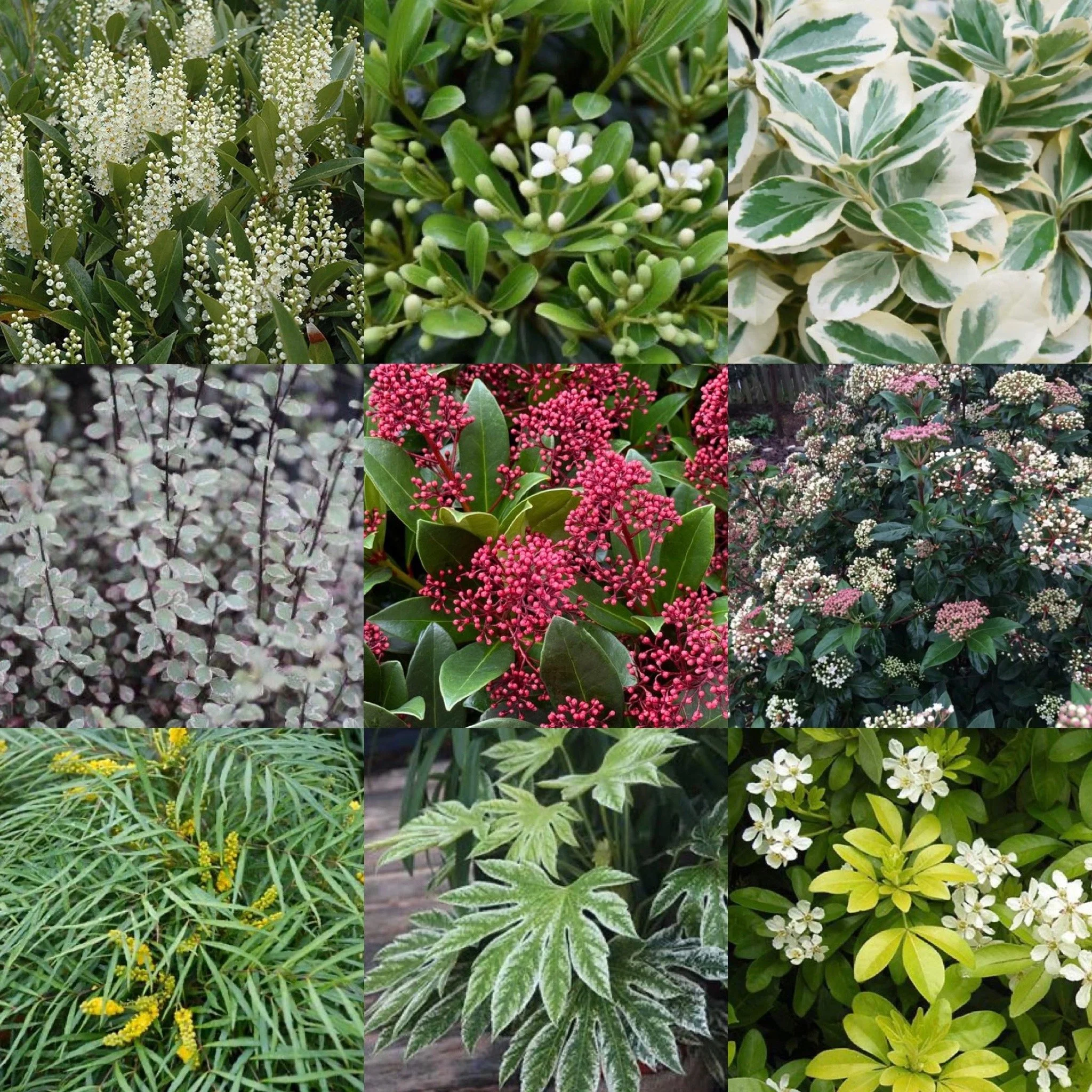
Shrubs that perform in dry and shady areas
Choisya Ternata
Why it works: Evergreen with fragrant white flowers in summer that smell like orange blossom; tolerates light shade and is relatively drought-tolerant once rooted.
Quick tip: Grouped planting in a sheltered, sunny edge yields the best scent and continuity of flowering.
Skimmia Japonica
Why it works: Fresh evergreen presence, clusters of small flowers in spring; tolerates shade well and becomes drought-tolerant after establishment.
Quick tip: Choose varieties with red berries for winter colour and structure. Plant near a pathway so you can appreciate the spring scent.
Fatsia Japonica
Why it works: Large structural glossy leaves that fill the back of a border well. Evergreen for all year round interest.
Quick tip: See the various cultivars, the ghost-like variegated variety is particularly attractive in a shady border.
Aucuba Japonica
Why it works: Striking yellow spotted and glossy leaf laurel which matures at around a metre tall. Very easy to care for. andhighly tolerant to deep shade and dry conditions.
Quick tip: Plant next to an alternative striking, but not variegated leaf shrub for contrast.
Mahonia Aquifolium
Why it works: Evergreen holly-leaved and tough foliage with bright yellow autumn flowers.
Quick tip: Plant at the back of the border to avoid the spiky leaves. Provides structure and year-round interest.
Mahonia Eurybracteata
Why it works: Distinguished by its softer evergreen, narrow leaflets that give the plant a lighter, almost fern-like appearance. Racemes of scented, bright yellow flowers are followed by clusters of decorative blue-black berries that extend its appeal into early spring.
Quick tip: From late autumn through winter, offering both seasonal interest and a vital nectar source when little else is in bloom.
Sarcococca
Why it works: Known as ‘sweet box’ this has highly fragrant winter flowers and is excellent for difficult, dry spots.
Quick tip: Should be lush and thick so keep fed to promote growth.
Viburnum Tinus
Why it works: Dense evergreen with pretty and delicate white-pink flowers, ideal for screening.
Quick tip: Prune after flowering to maximise flowering period.
Prunus Laurocerasus 'Otto Luyken'
Why it works: A compact, slow-growing, evergreen shrub ideal for low-maintenance hedges, screening, or ground cover, typically reaching high and wide.
Quick tip: It features dark green, narrow, glossy leaves and fragrant, upright white flower spikes in spring, followed by red-to-black berries, so place it where you can appreciate it.
Euonymus Fortunei
Why it works: Emerald 'n' Gold provides excellent contrast and is a very easy keeper.
Quick tip: Variegated foliage that adds light to dark areas.
Pittosporum Tenuifolium
Why it works: Varieties like Tom Thumb, Silver Queen and Gold Ball offer compact, mounded shrub with pretty coloured leaves.
Quick tip: Leaves turn green in sunny spots but stay dark in shade.
Pittosporum Tobira
Why it works: Known as Japanese Mock Orange, this is a highly adaptable shrub that tolerates dry shade well.
Quick tip: Produces orange blossom scented scented flowers, so plant where you can appreciate the amazing scent.

Trees that bring shade and stand up to drought
Arbutus Unedo
Why it works: Known as the Strawberry Tree, it thrives in full sun to light shade, preferring fertile, well-drained, and slightly acidic to neutral soil. Stunning leaves combined with blossom and berries.
Quick tip: It requires a sheltered position to protect it from cold, drying winds, but is drought-tolerant once established.
Acer Campestre
Why it works: Known as the Field Maple. Moderate drought tolerance once established and handles a range of light to moderate shade.
Quick tip: Choose a pollinator-friendly form if space permits. Carnival is a lovely variety.
Malus
Why it works: Known as the Crab Apple. Spring blossoms, useful autumn fruit, tolerant of shade and drought once established.
Quick tip: Support with moisture during first two summers if weather is unusually dry.
Ilex
Why it works: Known as Holly, this highly shade-tolerant, evergreen tree/shrub offers dark shiny leaves and colourful berries.
Quick tip: Has sharp leaves so plant where you won’t catch yourself.
Betula Pendula
Why it works: Known as the Weeping Silver Birch, these trees offer an elegant form with strong drought tolerance after establishment. Tolerates sun and some shade, is fast-growing and a good impact tree for small gardens.
Quick tip: Plant in well-drained soil and mulch to protect roots.
Taxus Baccata
Why it works: Known as Yew, this is a very hardy evergreen that handles full to partial shade well.
Quick tip: Keep trimmed into a hedge or topiary for a smaller more contained version.
Carpinus Betulus
Why it works: Known as Hornbeam, this tree or hedge is. a robust, fast-growing deciduous tree, often used in shaded areas.
Quick tip: Needs water until established. Aim to buy larger sized plant as very young whips tend to have a high failure rate.
Mountain Ash
Why it works: Known as Sorbus/ Rowan. Tolerant of varied light conditions.
Quick tip: Plant is a key position to appreciate attractive autumn foliage and berries.
Magnolia
Why it works: Suitable for spots with dappled shade, producing glossy foliage and flowers.
Quick tip: Prefers acidic soil so keep well fed on ericaceous feed.
Corylus Avellana
Why it works: Known as Hazel, this is a flexible choice that can thrive in shaded understory conditions.
Quick tip: Takes time to establish.
Prunus Lusitanica
Why it works: Evergreen Portuguese Laurel, provides structure and shade, tolerates coastal winds and urban dryness better than many; appreciate in partial shade.
Quick tip: Regular pruning helps keep it compact in shrub form for smaller spaces.
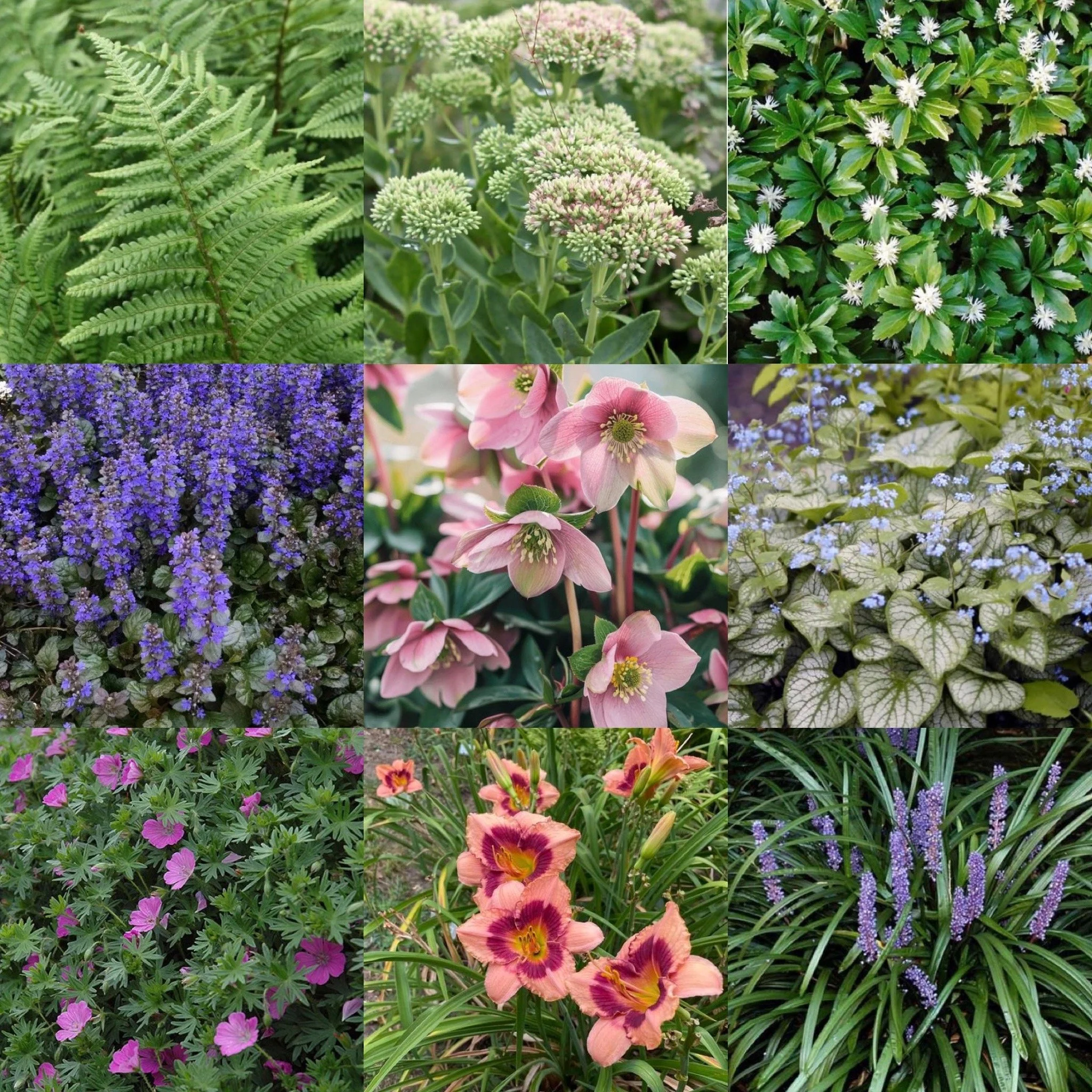
Perennials for dry and shady conditions
Hemerocallis
Why it works: Known as Day Lilliy, these plants are very easy to establish with long flowering windows from early summer to late summer across many cultivars. Drought-tolerant in sun or shade.
Quick tip: Divide every 3–4 years to maintain vigour. Come in varying colours and are very hardy.
Stonecrop
Why it works: Known as Sedum, they are very drought-tolerant; excellent for late-season colour; suitable for sun-shade dedicated borders.
Quick tip: Prefers highly fertile soil so keep manure mulched.
Nepeta
Why it works: Known as Catmint, this shade tolerant and offers long flowering period, drought-tolerant and tolerates light shade.
Quick tip: Trim after first flush in June to encourage a second burst of flowers.
Geranium x Macrorrhizum/ Cranesbill
Why it works: Known as Hardy Geranium, this plant evergreen foliage with a good bloom in spring to early summer. Tolerates drought and shade and is easy to grow.
Quick tip: Use as a ground cover for shade edges and under trees.
Phlox Paniculata
Why it works: Prolific late-summer to autumn bloom, loves sun but can tolerate light shade.
Quick tip: Ensure good air circulation to keep mildew at bay.
Brunnera Macrophylla/ Siberian Bugloss
Why it works: An herbaceous perennial forming a clump, with broad sprays of small, clear blue flowers, followed by large heart-shaped, long stalked leaves.
Quick tip: Striking foliage that appreciates highly fertile soil.
Helleborus
Why it works: Known as Lenten Rose, forms waxy, evergreen foliage with early spring blooms.
Quick tip: Trim dead leaves, leaving healthy leaves in situ.
Bergenia
Why it works: Known as Elephant’s Ears, offers large, leathery leaves provide structural ground cover and are highly adaptable.
Quick tip: Very pretty foliage and easy to care for.
Vinca Minor
Why it works: Known as Periwinkle, for low-maintenance evergreen ground cover with purple or white flowers.
Quick tip: This plant very fast-spreading and once it impossible to remove so be sure you want it.
Ajuga Reptans
Why it works: Suitable for dry, shady ground cover with lovely purple-green leaves.
Quick tip: Creeping, low-growing ground cover, so ensure it has space at the front of the border.
Pachysandra Terminalis
Why it works: Known as Japanese Spurge, this is a robust evergreen plant that forms a dense carpet.
Quick tip: Takes a little time to establish.
Liriope Muscari
Why it works: A grass-like evergreen plant with spikes of violet-blue flowers.
Quick tip: Low level and great for the front of a border.
Dryopteris/ Polystichum Ferns
Why it works: These ferns are more tolerant of dry conditions, more than other fern varieties.
Quick tip: Prefers highly fertile soil to really grow happily.
How to establish and care for drought and shade-tolerant plantings (UK focus)
Planting time: Early autumn is ideal in the UK, allowing roots to establish before winter; spring is workable if you water regularly. For drought-prone summers, aim to establish with consistent moisture in the first growing season.
Soil prep: Improve poor, sandy soils with organic matter mulch. For clay, add grit with wood chip and manure to improve drainage and root run.
Location thinking: Group plants with similar sun/shade needs together. Use taller shrubs and trees to create micro-shades for shade-loving perennials.
Watering strategy: Water deeply but infrequently during dry spells; mulching reduces evaporation and keeps roots cool.
Mulch and feeding: A 5–7 cm layer of organic mulch (home-compost or manure) helps maintain moisture and suppress weeds. Use a light, slow-release fertiliser in spring after planting; avoid heavy feeding which can encourage soft growth vulnerable to drought stress.
Maintenance: Prune after flowering for shrubs that blossom on new wood; deadhead perennials to encourage longer flowering; split or divide clumps every 3–5 years to maintain vigour.
Whether you’re planting a new garden or filling a shady corner, the right shrubs, trees and perennials can give you a garden that looks vibrant all year, with less watering and less fuss. By choosing plants with purpose—those that are long-flowering, easy to establish, and tolerant of drought or shade—you’ll create a resilient British garden that supports pollinators, stays colourful, and stays calm in changing weather. Start with a small, well-placed group of your favourite options from the lists above, add a dash of mulch and good soil, and you’ll be amazed at how quickly your space comes to life.
If you’d like, tell me your soil type, sun exposure, and garden size, and I’ll tailor a UK-focused planting plan with specific shrub, tree, and perennial picks that fit drought- and shade-tolerant needs.